The PAR-Q (Physical Activity Readiness Questionnaire) is a short yes/no questionnaire developed in Canada and revised in 1992. It has one job: to spot people who should talk to a doctor before they start or step up physical activity.
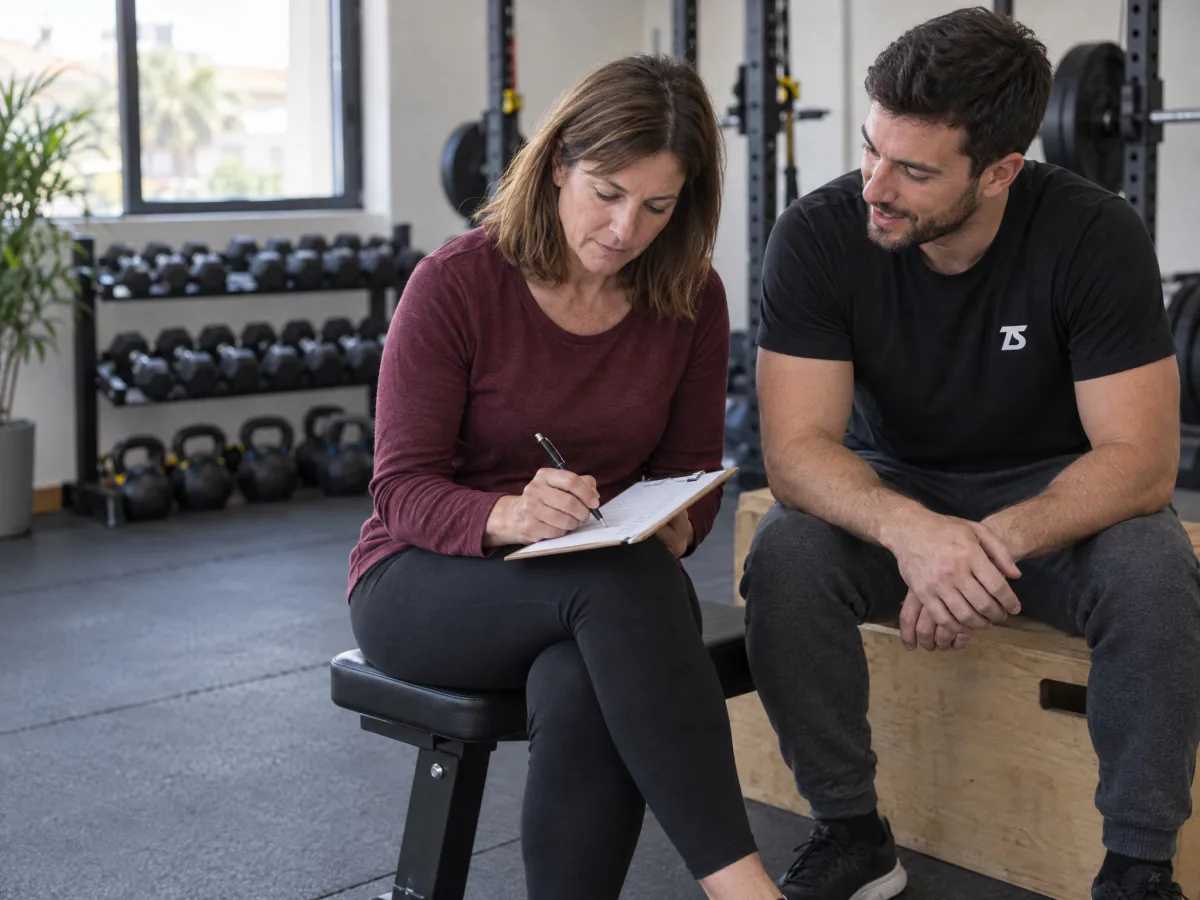
For a personal trainer, it's the first filter of the intake. You use it before the first session and before any strength or fitness test. In two minutes you know whether you can start or need a doctor's clearance first.
ACSM's 2015 screening recommendations look at the same things: whether the person already exercises, whether they have symptoms, and whether they have known cardiovascular, metabolic or kidney disease.
It's a pre-exercise health questionnaire written by TrainerStudio using the PAR-Q screening approach. It is not a copy of the PAR-Q or the PAR-Q+: the questions are in our own words. Your client answers yes or no to these eight:
- Have you been diagnosed with a heart condition or high blood pressure?
- Do you feel pain, pressure or tightness in your chest when you exert yourself?
- In recent weeks, have you had chest pain while you were not exercising?
- In the past year, have you been dizzy enough to lose your balance, or have you fainted?
- Do you have a bone, joint or back problem that gets worse when you move or train?
- Do you take medication for your heart or your blood pressure?
- Are you pregnant, or have you given birth or had surgery in the past six months?
- Is there any other health reason you think you should not start training now?
Then come their details and an emergency contact, what to do with a “yes”, a section for you (result, referral, medical clearance and the date to repeat it), the declaration with both signatures and a privacy note. Two US Letter pages to print or send.
A “yes” is not a diagnosis, and it doesn't mean they can't train. It means they talk to their doctor first. The doctor gives the clearance: trainers don't diagnose or interpret symptoms.
- Don't run fitness tests or start the program that day.
- Ask them to see their doctor and bring you written clearance with any restrictions.
- Write down on the form the date you referred them and the date you got the clearance.
- When they start, start conservatively: low to moderate intensity, gradual progression, and whatever the doctor advised.
The PAR-Q+ is the current official version. The PAR-Q+ Collaboration has maintained it since 2011, replacing the 1992 PAR-Q. It opens with seven general questions and, if any answer is “yes”, moves on to follow-up pages on specific conditions, such as arthritis, diabetes, high blood pressure or breathing problems, so fewer people are referred to a doctor without need.
You can download the official form at eparmedx.com. Its terms don't allow modifying it, translating it or putting it into websites or apps without written permission. If you want the official instrument, use it as is.
Our PDF is something else: a questionnaire of our own for a trainer's everyday work, with the same approach. It is not the PAR-Q+, it is not official and it is not validated.
Once a year, and sooner if their health changes: a new diagnosis, surgery, a pregnancy, a new medication or a symptom they didn't have before. The PDF keeps a line for the next screening date.
If a client comes back after a long break, have them fill it out again before you restart.
The health questionnaire is one part of the intake. It usually goes with:
- The client intake form, for goals, experience and injuries during the first meeting.
- The informed consent, signed before you start.
- The fitness assessment, once the questionnaire clears them for testing.
- The client onboarding template, so no intake step gets missed.
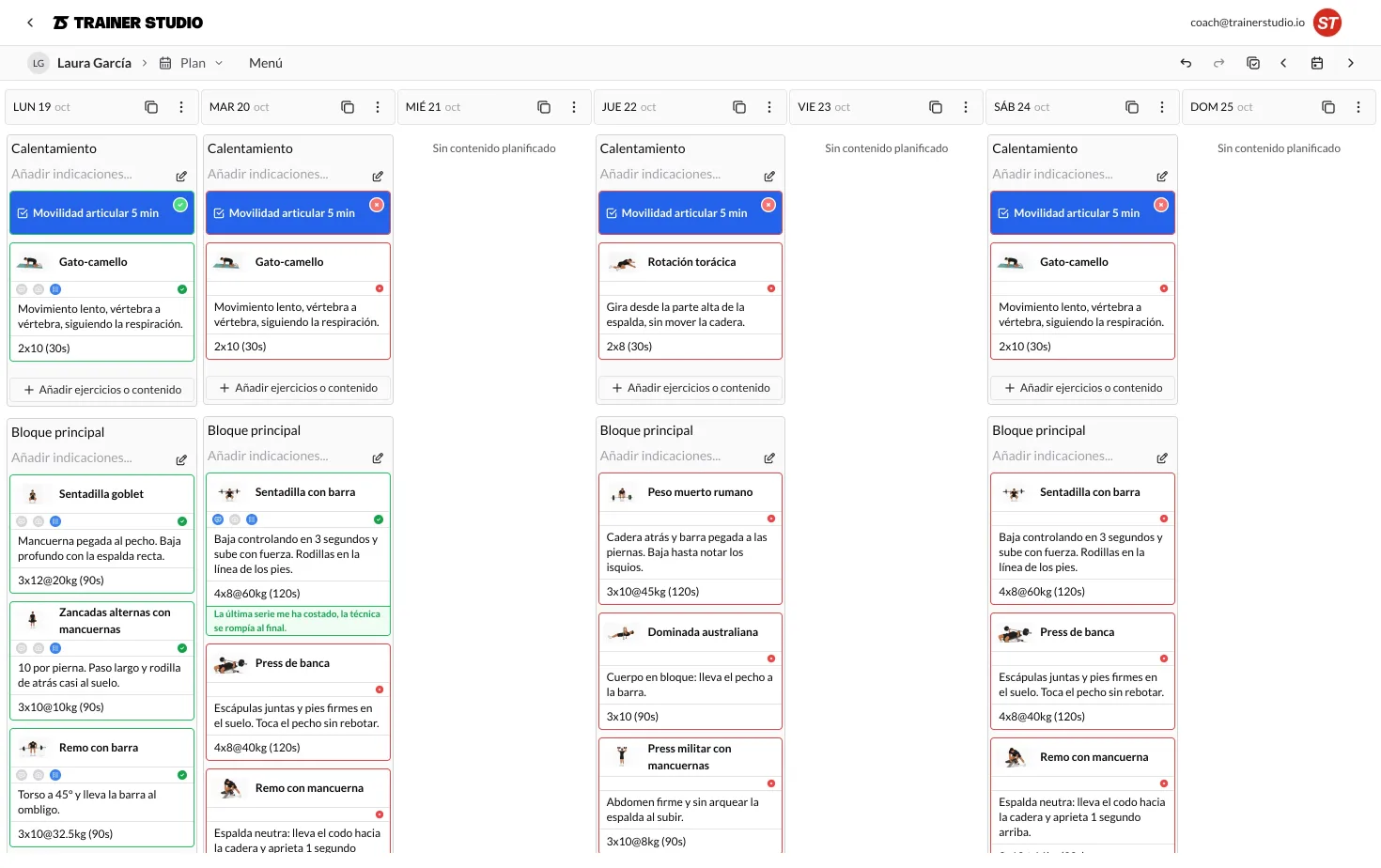
With the app there's nothing to print or file:
- Build the questionnaire once in Library → Forms, with single-choice Yes/No questions. You can use the ones in this PDF. How to create a form.
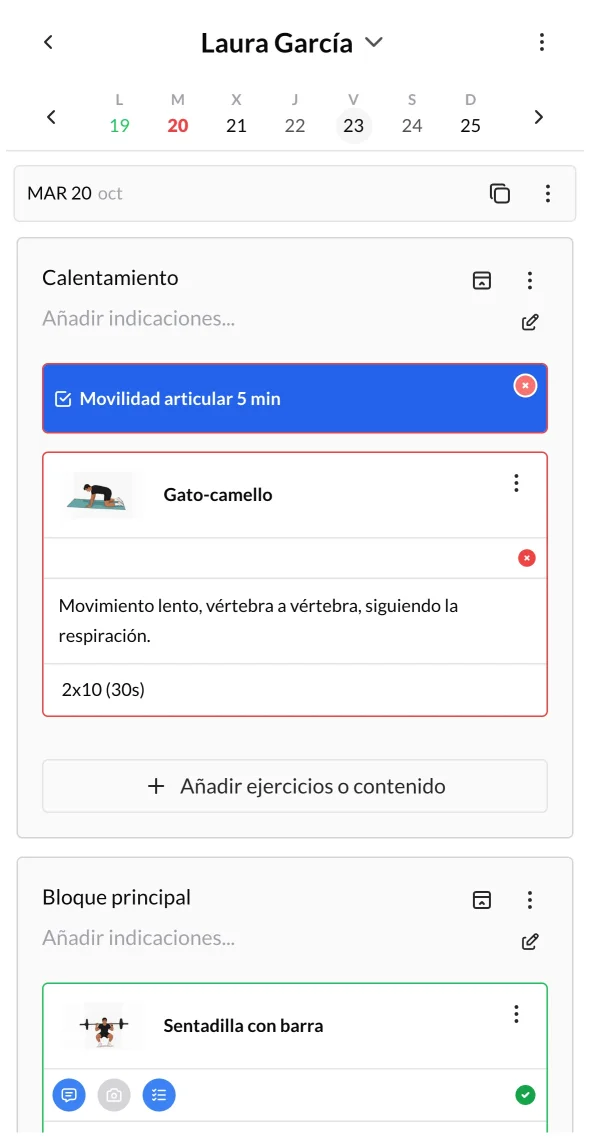
- Add it to the client's plan the day before the first session, and they answer it in their app.
- Review their answers in their profile.
- Send the informed consent as a PDF, and they sign it with a finger in the app. How to request a signature.
- To repeat it a year later, schedule the same form on that date.
Sources
- Thomas S, Reading J, Shephard RJ. Revision of the Physical Activity Readiness Questionnaire (PAR-Q). Can J Sport Sci. 1992;17(4):338-345.
- Warburton DER et al. The PAR-Q+ and ePARmed-X+. Health & Fitness Journal of Canada. 2011;4(2).
- Riebe D et al. Updating ACSM's recommendations for exercise preparticipation health screening. Med Sci Sports Exerc. 2015;47(11):2473-2479.
- PAR-Q+ Collaboration. Terms and Conditions, eparmedx.com (accessed November 19, 2026).









 @baumovment