

Calculator for opening a Pilates studio or small gym Before you sign the lease, run the numbers.
Enter what the space, the equipment and the instructors cost you, your membership fee and your class schedule. We'll tell you how many members you need to break even, what's left each month and how many months it takes to earn back the investment.

Pilates studio and small gym profitability Three numbers decide if it pays off. See how much each one moves.
With the calculator's Reformer Pilates example, here is how the margin changes when you pull each lever.
- 01
Occupancy
Every 10 more points of occupancy add $1,920 a month with the same costs. It's the lever that moves the margin most, and it comes down to filling your classes.
- 02
The fee
Raising the fee by $10 with 96 members adds $960 a month. And the more you charge, the fewer members you need to break even.
- 03
Fixed costs
Rent and payroll get paid even when the class is empty. In the example, covering them takes 60 members: 38% of your spots.
Figures from the calculator's editable example, not market data.
Opening a studio From the numbers to an open studio, step by step.
Small group training template
Sessions with three levels at every station, attendance and each member's monthly fees, in Excel.
Reformer Pilates class template
Reformer occupancy in every class, waitlist, spring loads and each client's attendance, in Excel.
Pilates client sheet
Health, injuries, postural assessment and Reformer setup for each client, in PDF.
The best software for Pilates studios
Client profiles, classes with capacity and memberships: three options compared.
The best software for small gyms
The options for running a small gym or studio, compared.
TrainerStudio pricing
What it costs to run your studio, in your currency and with 3 clients free forever.
Income calculator
Revenue, net income and what your hour is worth if you coach on your own.
Opening a studio, answered
Is opening a Pilates studio or a small gym profitable?
It comes down to three numbers: what you pay each month even if nobody shows up, your fee and how many spots you fill. A studio is profitable when the occupancy you can reach sits well above the one that covers your costs. If you need almost every class full just to break even, one slow month puts you in the red.
How many members do I need to break even?
Divide your monthly fixed costs by your fee. In the Reformer Pilates example, $7,200 in costs divided by a $120 fee is 60 members. With 8 spots, 40 classes a week and 2 classes per member, 160 members fit, so you break even with 38% of your spots filled.
How does the calculator work out members and occupancy?
Your weekly spots are the spots per class times the classes per week. The members who fit are those spots divided by the classes each membership includes. The members at your occupancy are that maximum times the percentage you expect. The margin is what those members pay minus your fixed costs.
How long does it take to earn back the investment?
Divide the upfront investment by your monthly margin. In the Reformer Pilates example, 96 members leave $4,320 a month, so the $45,000 comes back in 11 months. It's an optimistic estimate: it assumes you hit your occupancy from month one. In practice members come in little by little, so also try a lower occupancy to see your first months.
How much does it cost to open a Pilates studio?
It depends on how many Reformers you buy, how much build-out the space needs and your city. Get quotes for the machines and the build-out and enter them as your upfront investment. The $45,000 in the example is a starting figure to edit, not a market average.
Which fixed costs do people forget?
Liability insurance, your accountant, equipment maintenance, advertising, payment processing fees and the software for bookings and memberships. What TrainerStudio costs is on the pricing page, with your first 3 clients free.
Where does my own pay fit in?
Payroll is what your instructors cost. If you teach the classes yourself and don't pay yourself a salary, the margin left is what you take home, before taxes. To see whether the studio can pay you a fixed salary, add it to payroll: whatever margin is left is the studio's profit.
What else do I need to open?
A business license and local permits, insurance, equipment and a plan for your first members. Business structure, taxes, insurance and how to find clients are in the personal trainer business plan guide.
For trainers and instructors only Opening your own studio? Classes, memberships and client profiles in an app with your brand.


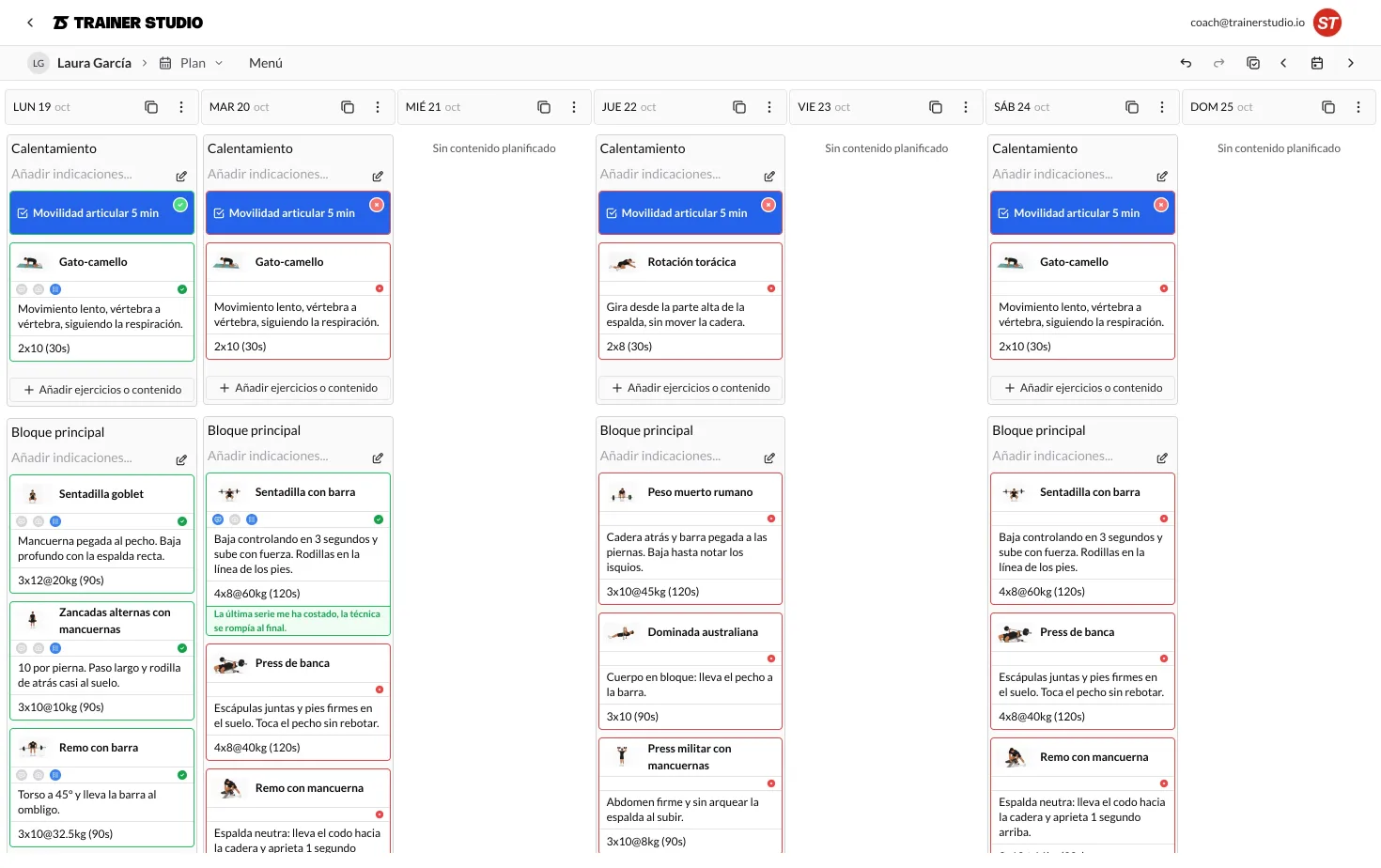
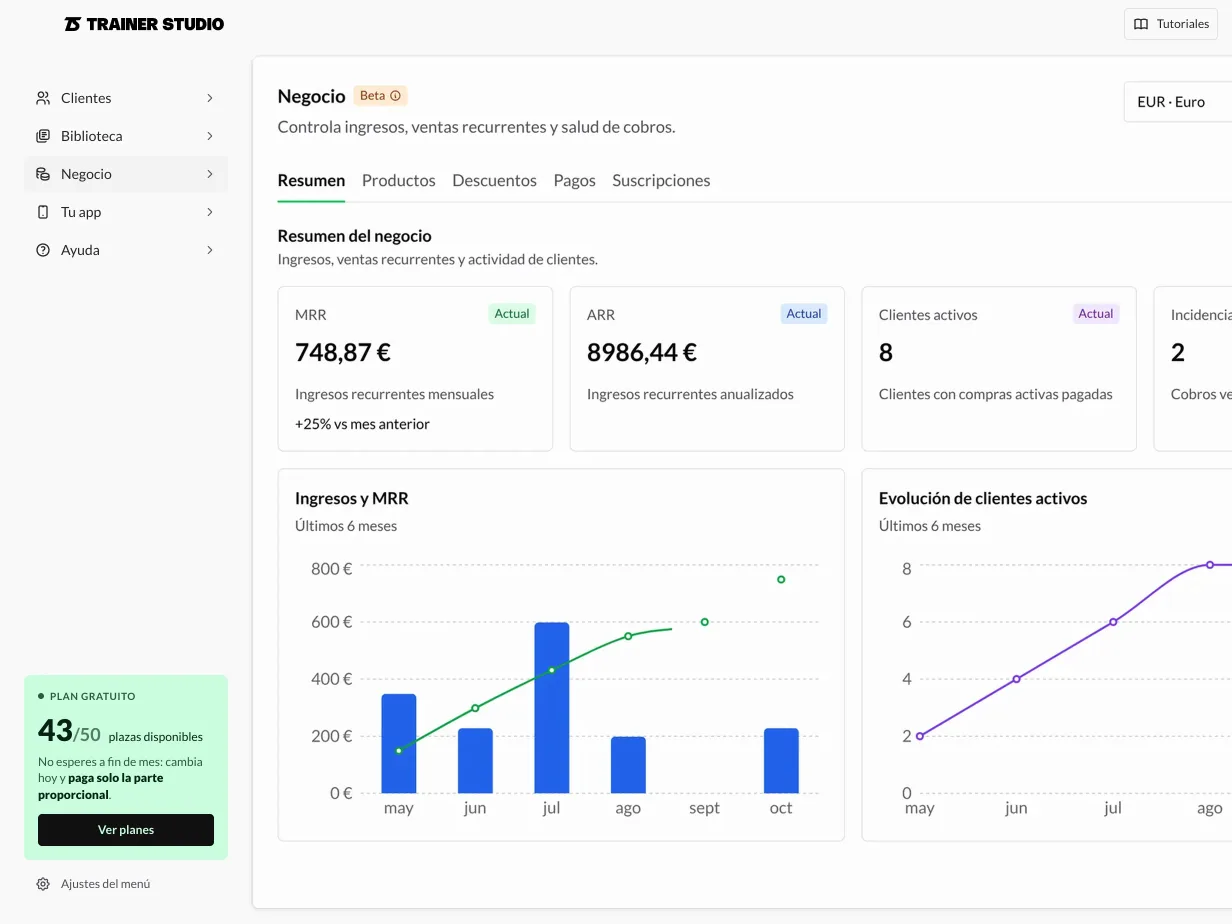
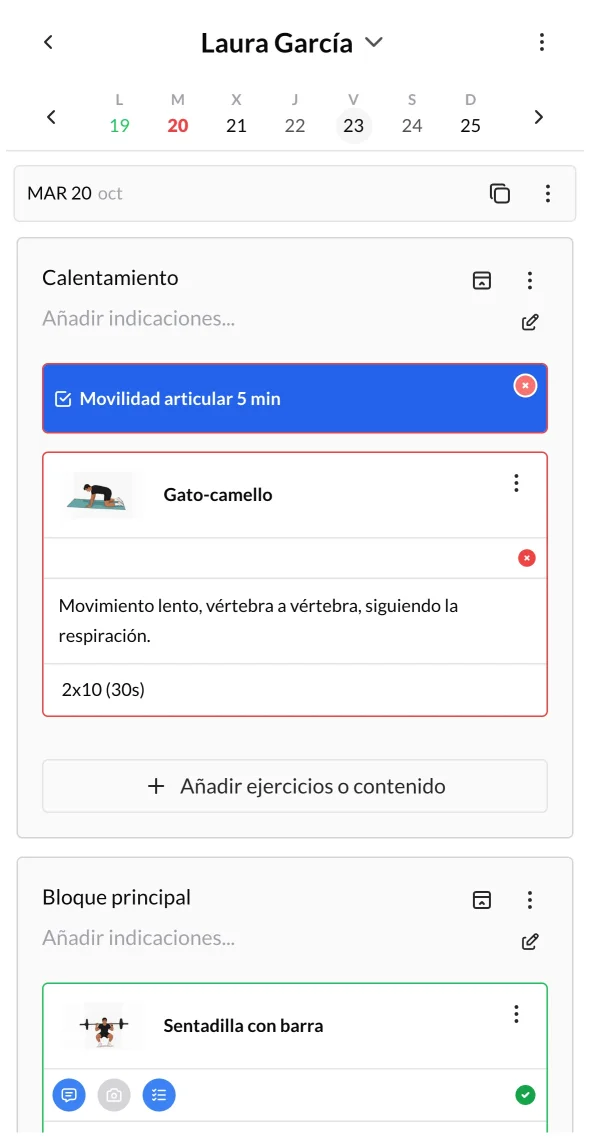
With TrainerStudio you create each class with its spots and your clients book from the app. When a class is full, they join the waitlist; if someone cancels, their spot goes to the next person in line. You charge the membership every month and each instructor sees the profiles of their own clients.
3 clients free forever · No card
Taking classes at a studio? You don't need an account: if your studio uses TrainerStudio, it will invite you to its app.