Business · November 11, 2026
API for Personal Trainers: Connect Your Website, CRM and Automations
What you can automate with the TrainerStudio API, four examples ready to build and when you don't need it.

Short answer: TrainerStudio has a public REST API included in your plan. It lets other tools work with your account without you lifting a finger: sign up whoever fills in your website form, assign the welcome program when someone pays, or dump a weekly report into a spreadsheet. You use it with Zapier, Make, n8n or your own code. If you only want to ask questions and have AI prepare things for you, you don't need the API: connecting ChatGPT or Claude is enough.
What an API is, without the jargon
Your training app has a door for people (the screen) and another for programs (the API). Through the second, a tool like Zapier can do what you would do by hand: create a client, assign them a program or read their metrics. So the door knows it acts on your behalf, the tool carries an API key, a kind of password that you create and revoke yourself.
The difference from doing it by hand is that it happens on its own, at any hour and always the same way. That's why more and more coaches ask about the API when choosing software: the bottleneck of a growing business is rarely programming, it's the repeated tasks around each client. If you're at that point, how to automate your personal training business has the full map.
What you can do with the TrainerStudio API
| Area | What it allows |
|---|---|
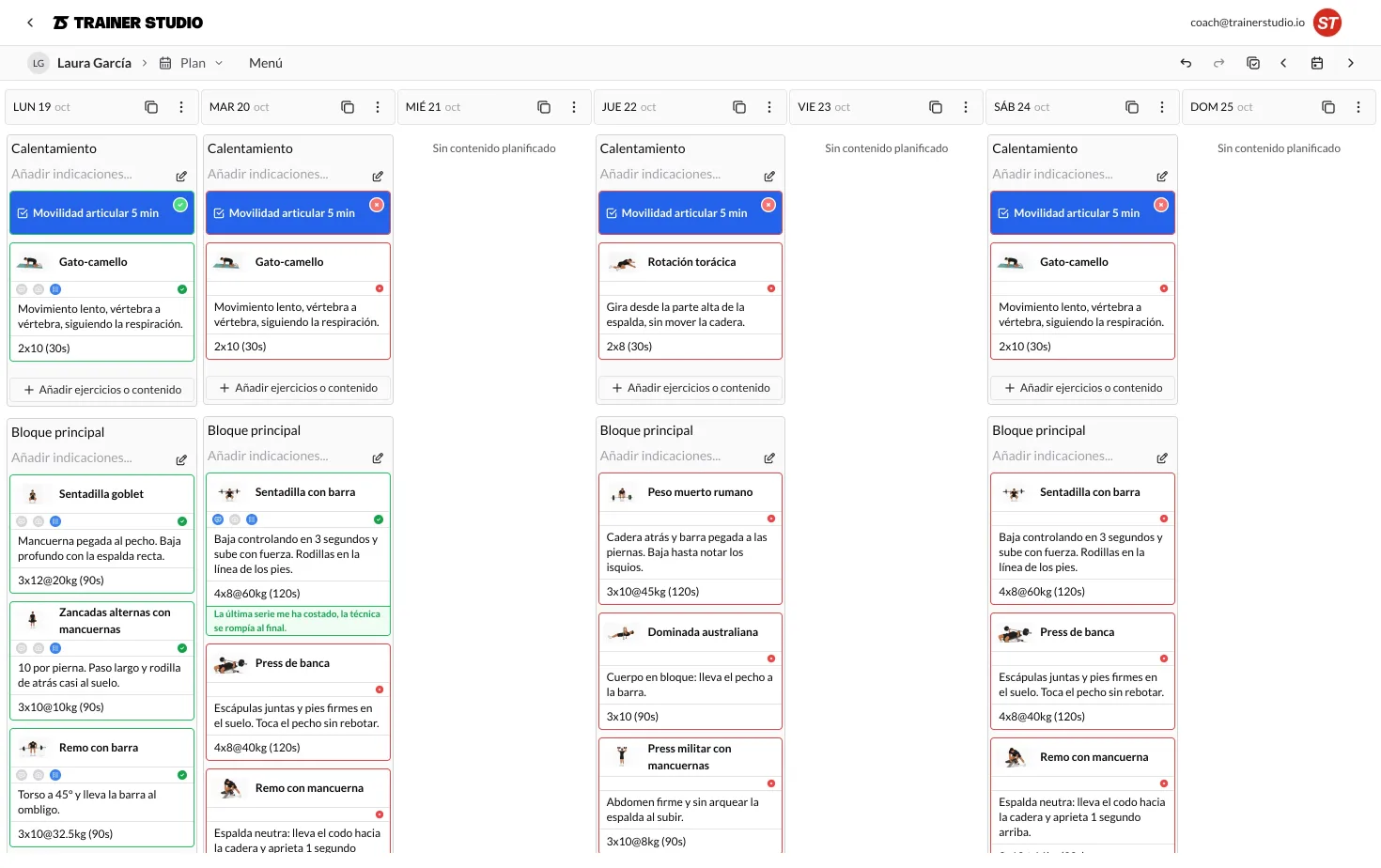
| Clients | Create, edit and archive clients, search them and organize them into groups. |
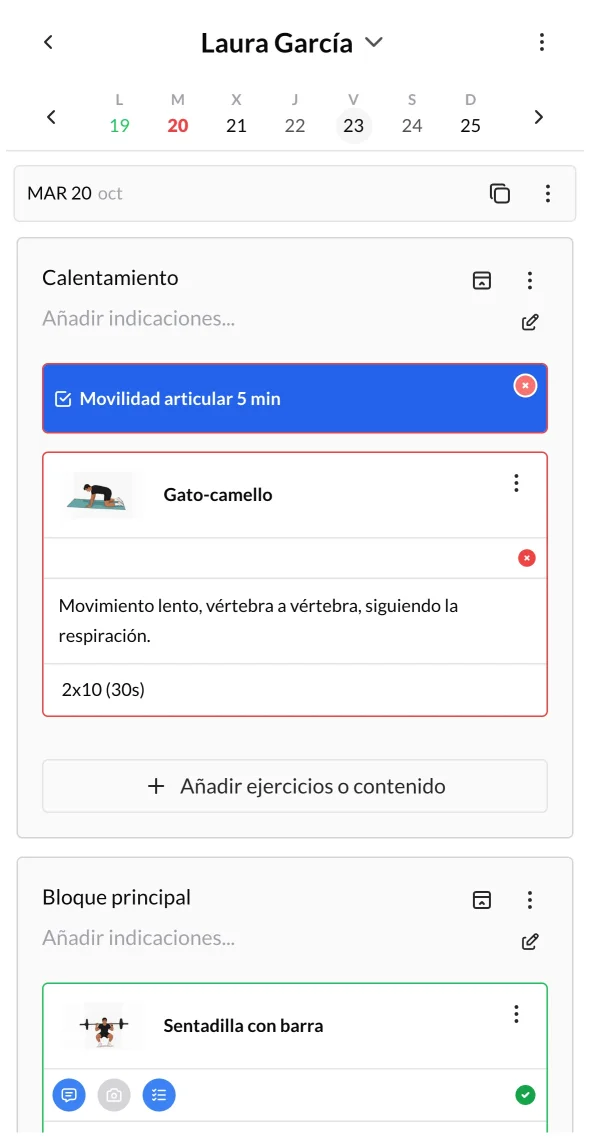
| Workouts | Create sessions with exercises, sets and supersets. |
| Programs | Create reusable programs and assign them to clients. |
| Exercises | Search the exercise library. |
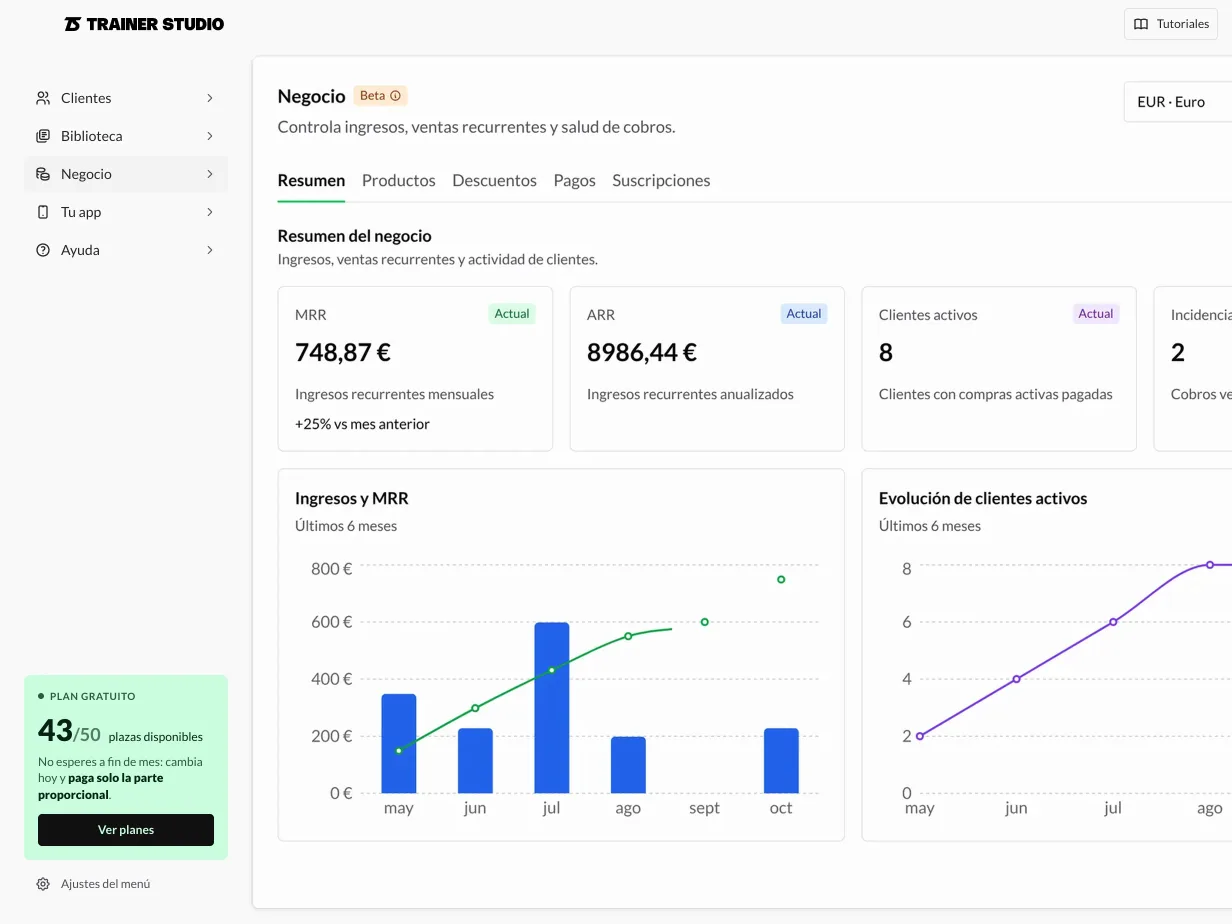
| Metrics | Read and log weight, measurements, lifts and custom variables. |
| Nutrition and notes | Manage nutrition plans and each client's internal notes. |
What's left out is deliberate: payments, billing, team and managing the keys themselves can only be done from the app. That way a leaked key can never change your plan or give someone else access.
4 automations you can build
1. Sign-ups from your website or form
- When: Someone fills in the form on your website, a Typeform or a Google Form.
- What it does: The automation creates the client in TrainerStudio with their name and email and, if you want, sends them the app invitation.
- Result: The new client is already in your account before you open your email.
2. Starter program when payment is confirmed
- When: Your payment gateway or CRM marks a lead as a client.
- What it does: The automation finds the client and assigns your welcome program from the date you choose.
- Result: Their first sessions show up in their app without you scheduling anything by hand.
3. Weekly report in a spreadsheet
- When: Every Monday at 8:00 a.m.
- What it does: The automation reads your active clients, their compliance and their metrics, and writes one row per client in Google Sheets.
- Result: You get the week's summary without opening client after client.
4. Your own AI agent
- When: Your own program with an AI model (Claude, GPT or another).
- What it does: The agent uses the API as a tool: it looks up clients, proposes sessions and saves them when you approve.
- Result: An assistant tailored to your method, with your rules.
Here's what the request from the first example looks like. In Zapier, Make or n8n you fill in these same fields in the HTTP request step:
POST https://api.trainerstudio.com/coach/customers
X-API-Key: your-key
Content-Type: application/json

{
  "name": "Laura Perez",
  "email": "laura@example.com",
  "sendInvitation": true
}
With sendInvitation set to true, the client receives the invitation to join your app. While you test, set it to false. The developer quickstart continues the example all the way to creating a session with exercises.
API or connecting ChatGPT and Claude?
Both work with the same data, but they solve different things. The API is for what should happen on its own; the assistant is for what you decide in the moment.
| If you need… | Use | Why |
|---|---|---|
| Ask one-off questions and have it prepare programs or messages | Connect ChatGPT or Claude | No code or keys. You talk to the assistant and review before saving. |
| Make something happen on its own when an event occurs (a payment, a form) | API + Zapier, Make or n8n | Works even when you're not around, the same way every time. |
| Sync TrainerStudio with your CRM or another tool | API | You read and write the data you need with the rules you define. |
| Build your own assistant or product | API (or MCP if your platform supports it) | Full control over what the agent does and how it presents itself. |
For the assistant, follow how to connect ChatGPT or how to connect Claude. If you can't decide between the two, read ChatGPT or Claude for personal trainers.
How to get started in 3 steps
- 1. Create a key. In the app, Your app → Developers → Create API Key. Name it after the tool that will use it (“Zapier”, “Website”). We cover it in how to create an API key.
- 2. Test with a dummy client. Create a test client without an invitation and check that it shows up in your account.
- 3. Build the real flow. Check each endpoint's fields in the API reference and the developer documentation.
Treat the key like a password
- One key per integration, so you can revoke them one at a time.
- Don't paste it into emails, chats or public code.
- If you stop using a tool, revoke its key the same day.
Frequently asked questions
Does TrainerStudio have a public API?
Yes. It's a REST API documented at www.trainerstudio.com/en/developers, with an interactive reference of every published endpoint. It covers clients, workouts, programs, exercises, metrics, nutrition and notes.
Is the API included in my plan?
Yes. API keys are created from Your app → Developers at no extra cost. Only whoever manages the account's billing, usually the owner, can see them.
Can I use the API with Zapier, Make or n8n?
Yes, with each tool's HTTP request module: you set the endpoint URL, the method and the X-API-Key header with your key. You don't need a dedicated TrainerStudio app on those platforms.
Does TrainerStudio notify my automation when something happens?
It doesn't send webhooks. Your automation is the one that asks: for example, every hour or every day it fetches the data it needs. For most coaching workflows that's enough.
Do I need an API key to connect ChatGPT or Claude?
No. ChatGPT and Claude connect through a secure sign-in from their settings. The API key is for automations and your own programs.
What if someone sees my key?
Revoke it from Your app → Developers and create another one. Revocation is immediate: any integration using it stops working right away.