

For instructors and studio owners
Lagree vs. Reformer Pilates
Both rooms have springs and moving carriages. What you teach on them, who can teach it and what each occupied spot has to earn are different decisions.
Compare the break-even numbers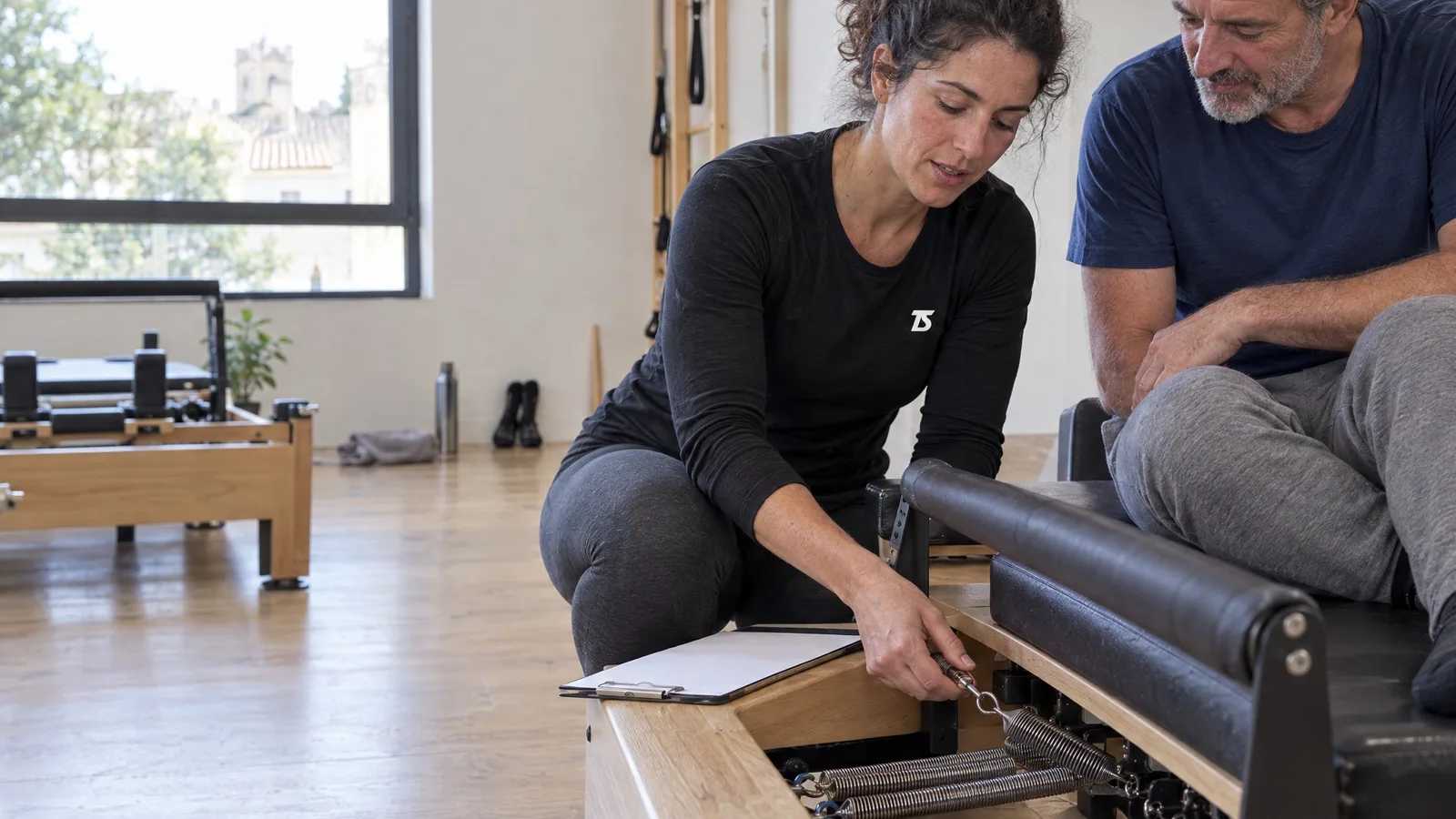
What changes on the studio floor?
Method and pacing
- Lagree
- Sebastien Lagree’s strength-endurance method uses slow repetitions, sustained muscle tension and short transitions. The next exercise starts close to where the last one ended so the class can keep working.
- Reformer Pilates
- Reformer Pilates teaches the Pilates repertoire on a spring-loaded carriage. Breath, alignment and control guide the movement. An instructor can pause to refine one repetition or link a familiar sequence into a flow.
Equipment and capacity
- Lagree
- A Megaformer has platforms at both ends and a moving carriage between them. Model choice affects exercise options, footprint and the studio license. Ask for a floor plan, delivered equipment quote and service terms for that model.
- Reformer Pilates
- A Pilates reformer combines a footbar, spring-loaded carriage and straps. Footbar positions, boxes and spring resistance vary by model. Allow room to adjust a machine and reach a client, then count the stations you can actually teach.
Instructor training and studio licensing
Before you buy machines or book a course, separate the instructor’s qualification from the studio’s right to offer a branded method.
To teach Lagree
The instructor starts with Lagree Academy’s Level 1 certification. Lagree lists in-person and virtual training and separate advanced courses. Ask the host which machine the course uses and what you must complete before teaching at a licensed location.
To open a Lagree studio
The owner confirms territory availability with Lagree and arranges a studio license and equipment separately. Lagree lists the Megaformer/EVO license at US$3,990 per studio per year, covering multiple machines. Mini and Micro have their own rates. Instructor training is a separate cost. Get the terms for your address and model in writing.
To teach Reformer Pilates
Check the reformer-specific qualification your studio or insurer accepts. For example, Merrithew’s STOTT PILATES Intensive Reformer course includes observation, personal practice and practice teaching, with an exam for certification. Other schools set their own requirements. A mat certificate alone tells you little about someone’s apparatus training.
An independent Reformer Pilates studio can choose its school and equipment. Check any franchise or branded-program agreement separately. TrainerStudio is an independent publisher. Source terms checked November 18, 2026.
Plan the first ten minutes
These are two examples for a group new to the machine. Choose exercises and spring settings you’re trained to teach on the exact model in the room.
Lagree
Use the opening minutes to show the fixed platforms, carriage and handholds. Rehearse the first transition at rest. For the first working block, choose two familiar movements from the same end. Cue the next position before the last slow rep and give a shorter-range option.
Reformer Pilates
Start with supported footwork. Check the footbar and springs, then watch each student control the carriage on the return. Change one variable, such as foot position, before adding straps. Leave a pause to check the new setup and note which cue worked.
Lagree vs. Reformer Pilates
How many spots pay for the room?
Compare two uses of the same room. Start with the sample timetable below, then enter your own net receipts, instructor pay and quotes. One spot means one paid visit, including repeat visits by the same person.
Edit either column. All money is in US dollars. Use whole counts and up to two decimal places for money, without thousands separators.
Bookable machines per class
Classes scheduled per month
Paid spots in a typical class
Net receipts per paid spot ($)
Use what you keep after discounts, taxes collected and per-visit costs.
Instructor pay per class ($)
Other fixed costs per month ($)
Include rent, insurance and any monthly allowance for training. Count each cost once.
All equipment per month ($)
Use the fleet lease, or divide the delivered purchase price by your chosen recovery period in months. Include maintenance.
Studio brand license per year ($)
Use the annual quote for this location. An independent Reformer studio starts at $0 for a brand license. Change it if a contract applies.
Monthly break-even
Lagree
Lower bound · quotes missing
Blank quotes are excluded. Enter a quote or an explicit zero to complete this option.
- Paid spots needed for the scheduled classes
- 170
- Spots available on that timetable
- 320
- Classes needed at typical attendance
- 30
- Monthly fixed costs included
- $1,800.00
Reformer
Lower bound · quotes missing
Blank quotes are excluded. Enter a quote or an explicit zero to complete this option.
- Paid spots needed for the scheduled classes
- 170
- Spots available on that timetable
- 320
- Classes needed at typical attendance
- 30
- Monthly fixed costs included
- $1,800.00
How the worksheet counts
- Monthly fixed costs = other fixed costs + equipment allowance + annual studio license ÷ 12.
- With a fixed timetable, paid visits needed = (monthly fixed costs + scheduled classes × instructor pay) ÷ net receipts per visit.
- With a fixed class size, minimum classes = monthly fixed costs ÷ (paid spots per class × net receipts per visit − instructor pay). Both targets round up to whole visits or classes.
Model memberships and payback with the studio profitability calculator
From timetable to bookings
Once you choose a format, set the class capacity in TrainerStudio so clients can book the spots you actually have.